


- New
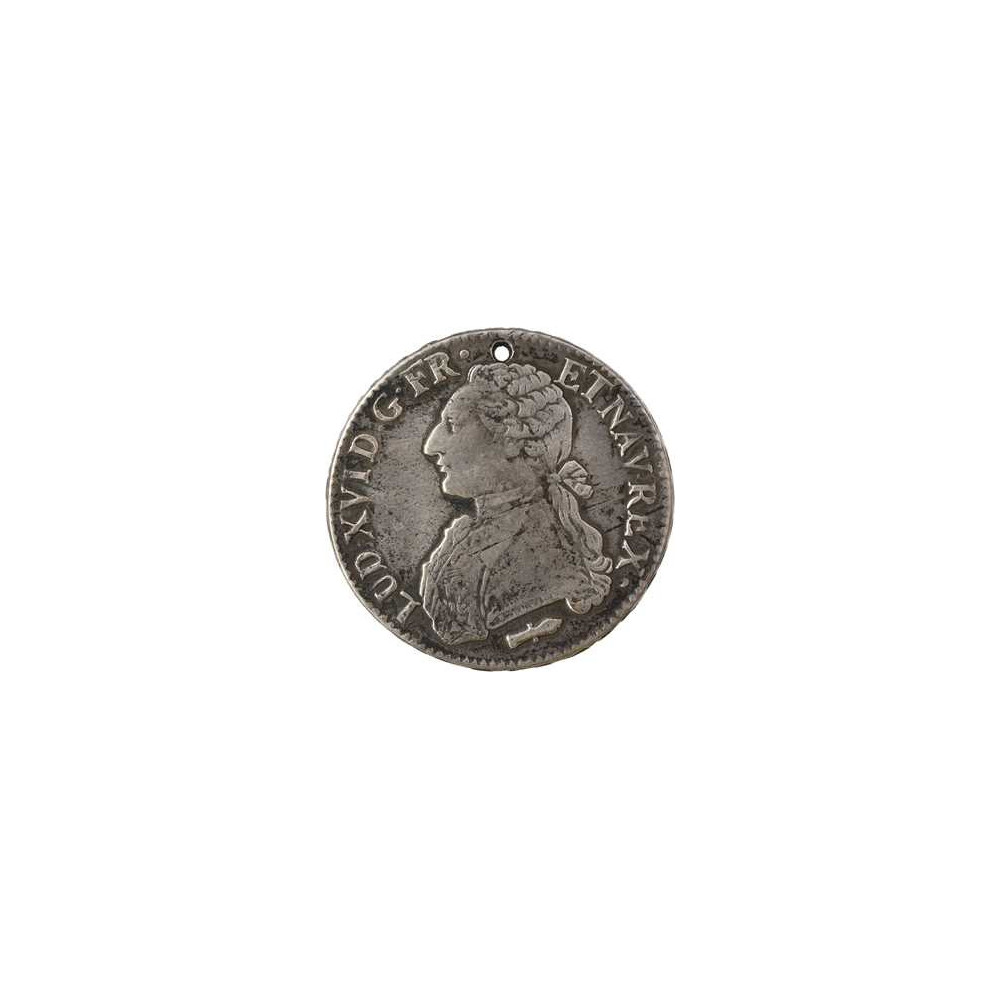
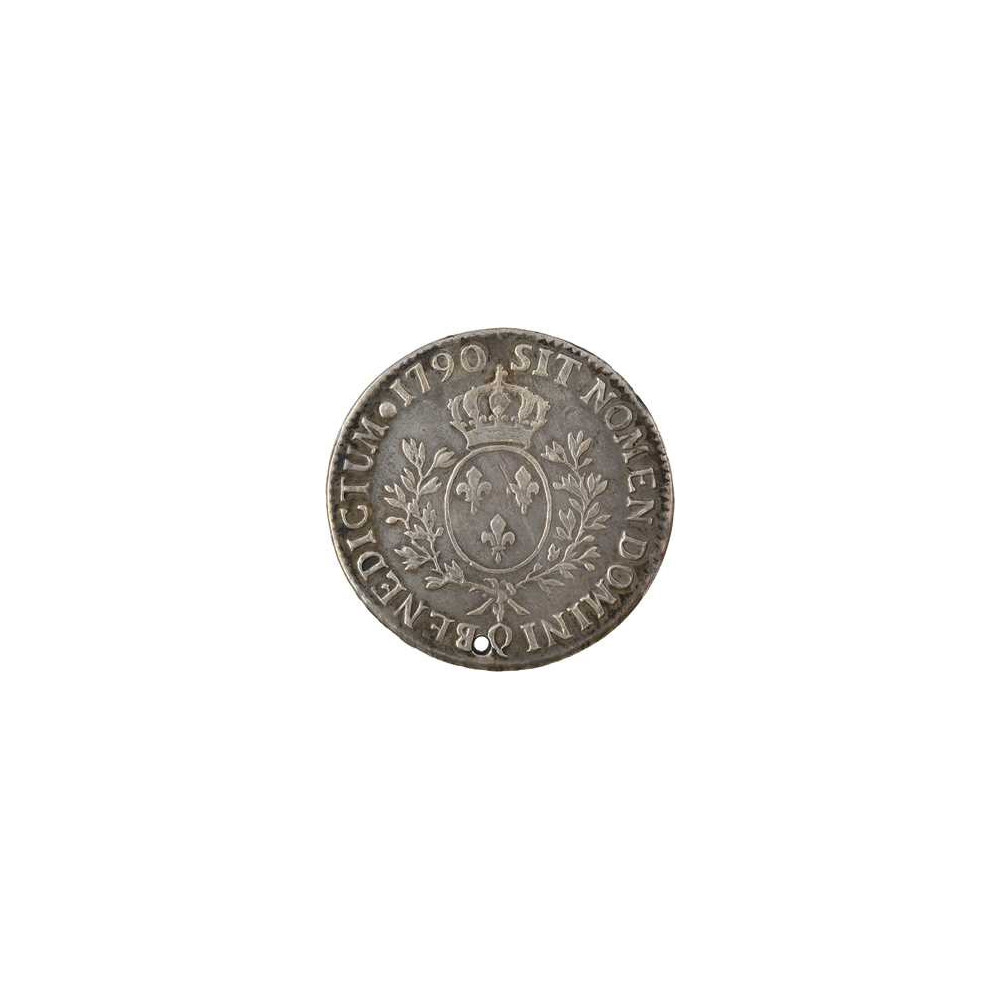
Louis XVI - Écu 1790 - 29.18 g - silver coin
Material: silver
Fineness: 917/1000
Weight: 29.18 g
Diameter: 41 mm
Country of Origin: France
Denomination: 1 Écu
This historic silver coin with a face value of 1 Écu, minted in 1790 during the reign of French King Louis XVI (1774–1792), is an important example of French royal coinage from the period of the French Revolution. The coin originates from the Perpignan mint, marked with the letter “Q,” and was struck from silver with a fineness of 917/1000, with a catalog weight of approximately 29.49 g and a diameter of about 41 mm.
The coin is known by its French name, “Écu aux branches d’olivier,” meaning “écu with olive branches.” This traditional type of French silver coin was a symbol of royal authority and an important part of the monetary circulation of the Kingdom of France. Its face value was equivalent to 6 livres (livres tournois).
The 1790 issue dates from an exceptionally significant historical period when France was undergoing fundamental political and social changes. The Great French Revolution, which began in 1789, gradually weakened the absolutist monarchy and led to its demise in 1792. The coin thus serves as an authentic testament to the final years of the reign of King Louis XVI of France.
The obverse of the coin depicts a left-facing profile of King Louis XVI, dressed in an ornate ceremonial robe and wearing the Order of the Holy Spirit. The monarch’s hair is tied back with a ribbon. The portrait is accompanied by the Latin inscription “LUD. XVI. D. G. FR. ET NAV. REX,” which translates to “Louis XVI, by the Grace of God, King of France and Navarre.” The portrait was created by the French medalist Pierre-Benjamin Duvivier.
The reverse side features a crowned oval shield bearing three heraldic lilies, the traditional symbol of the French monarchy. The shield is surrounded by two olive branches, symbolizing peace and victory. The composition is complemented by the Latin inscription “SIT NOMEN DOMINI BENEDICTUM,” meaning “Blessed be the name of the Lord,” the year 1790, and the mint mark “Q,” denoting Perpignan.
The edge of the coin bears the Latin inscription “DOMINE SALVUM FAC REGEM,” which translates to “Lord, protect the king.” This traditional royal inscription underscores the religious and monarchist symbolism of France at that time.
Thanks to its age, historical significance, and origins dating back to the French Revolution, the 1790 silver écus of Louis XVI is an attractive collector’s item for enthusiasts of numismatics, French history, and historic silver coins.
Data sheet

Louis XVI - Écu 1790 - 29.18 g - silver coin
Material: silver
Fineness: 917/1000
Weight: 29.18 g
Diameter: 41 mm
Country of Origin: France
Denomination: 1 Écu

