


- New
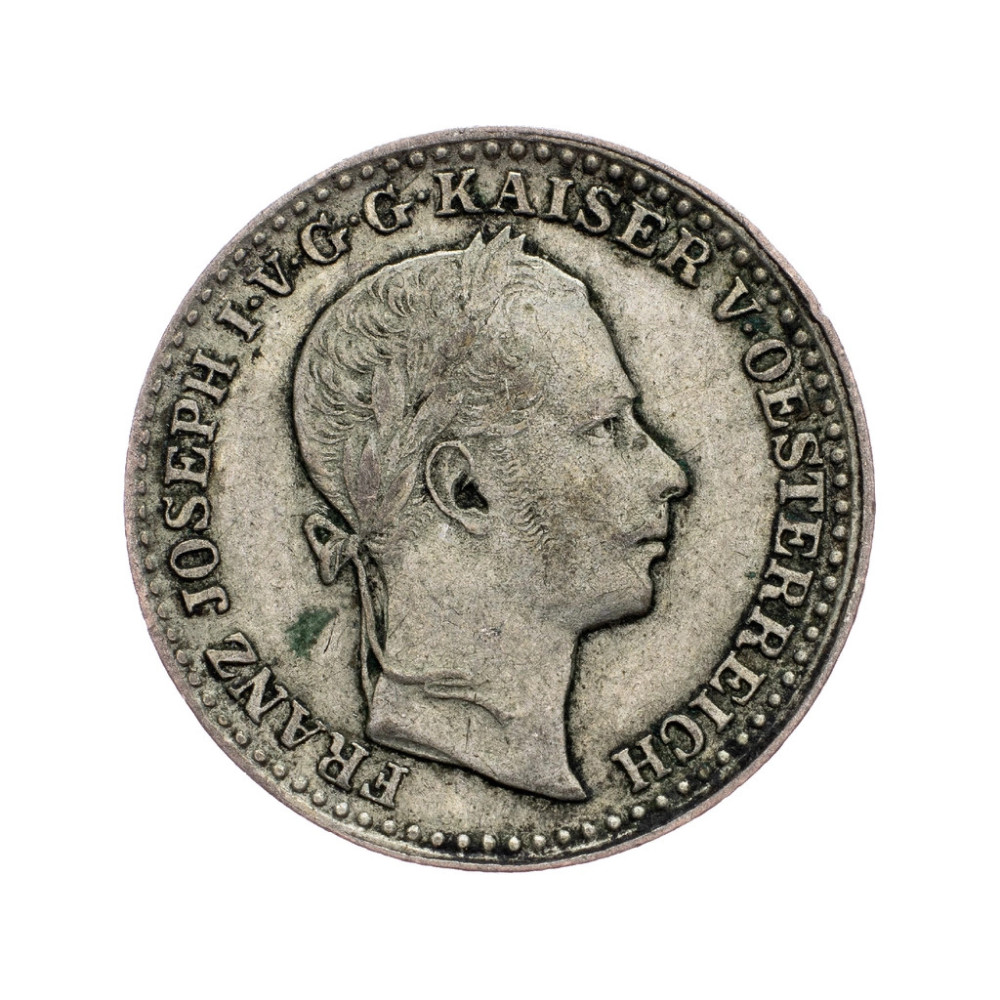
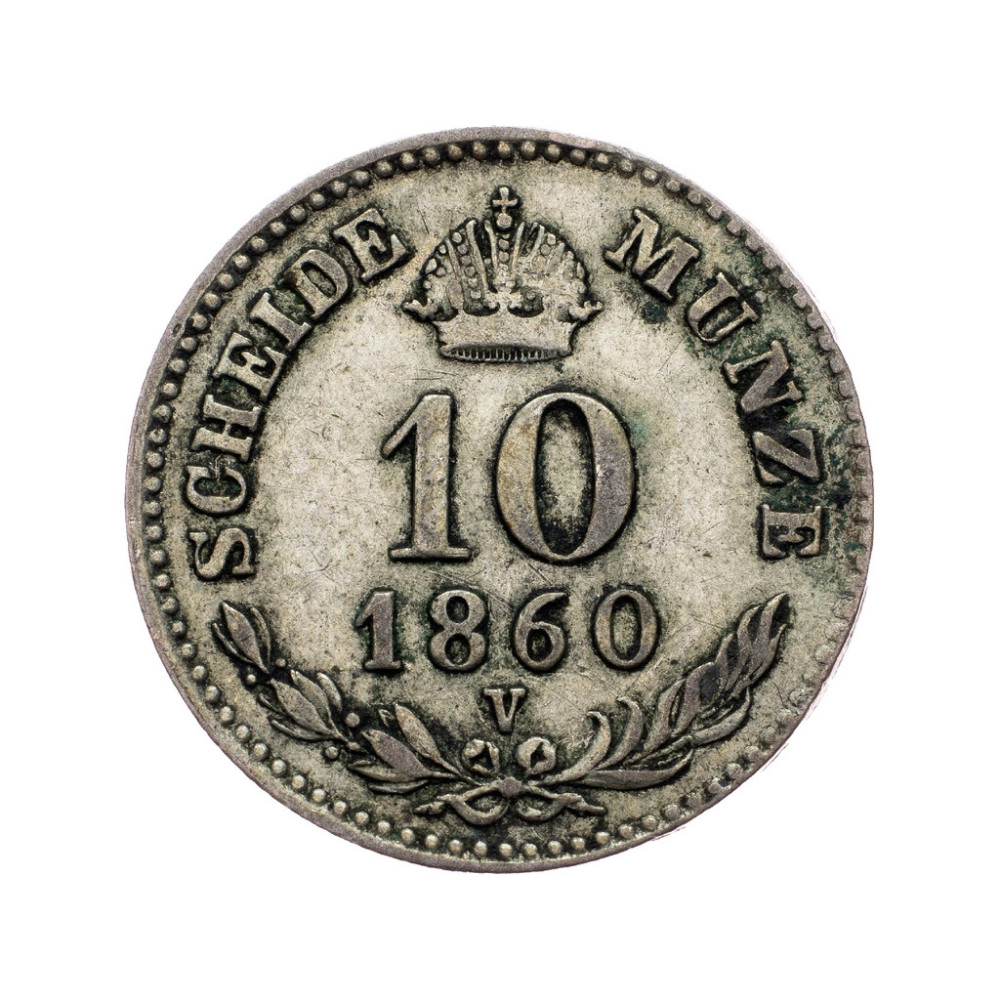
10 Krejcar 1860 – 2 g – silver coin
Material: silver
Fineness: 500/1000
Weight: 2 g
Diameter: 18 mm
Country of Origin: Hungary
Denomination: 10 Krejcar
This historic silver coin with a face value of 10 kreutzers, minted in 1860 during the reign of Emperor Franz Joseph I (1848–1916), is an interesting example of the monetary history of the Austrian Empire. The coin originates from the mint in Venice, marked with the letter “V,” and was struck from silver with a fineness of 500/1000, weighing approximately 2 g and measuring 18 mm in diameter.
The coin dates from a period of significant monetary reforms in the Habsburg Monarchy. In 1857, a new decimal monetary system was introduced, in which one florin was divided into 100 kreuzers. The ten-kreutzer coin was a common coin in circulation, used for everyday transactions throughout the vast Austrian Empire.
The obverse of the coin depicts the right-facing profile of the young Emperor Franz Joseph I, surrounded by the German inscription “FRANZ JOSEPH I·V·G·G·KAISER V·OESTERREICH,” which translates to “Franz Joseph I, by the Grace of God, Emperor of Austria.” The portrait of the monarch is characteristic of coins minted during the early years of his long reign.
The reverse side bears the face value of 10 kreuzers, located beneath the imperial crown. The composition is complemented by the year 1860, the mark of the Venetian mint “V,” and the German inscription “SCHEIDE MÜNZE,” indicating a small circulation coin. At the bottom is a decorative wreath composed of plant motifs.
The coin was minted at a time when Venice still belonged to the Habsburg Monarchy. The Austrian Empire did not lose the Venetian region until 1866, which lends this coin additional historical significance.
Thanks to its age, its origin from the Venetian mint, and the distinctive portrait of the young monarch, it is an attractive collector’s item for enthusiasts of numismatics, Habsburg history, and historic silver coins.
Data sheet

10 Krejcar 1860 – 2 g – silver coin
Material: silver
Fineness: 500/1000
Weight: 2 g
Diameter: 18 mm
Country of Origin: Hungary
Denomination: 10 Krejcar